
Telecom providers operate in a competitive environment where delivering reliable services is only one part of running a successful business. Managing customers, subscriptions, invoices, payments, service usage and reporting also requires an efficient business management system. As service portfolios grow, handling these activities through separate tools or manual processes can become increasingly difficult. This is where White Label Billing Software becomes valuable. It allows telecom providers to use an established billing platform under their own company branding rather than developing a complete billing system from scratch. Businesses can offer a consistent customer experience while benefiting from centralised billing operations, automation and management capabilities. For VoIP providers, Internet Telephony Service Providers (ITSPs), managed service providers (MSPs) and other telecom businesses, choosing the right platform involves more than finding software that generates invoices. The solution should support different pricing structures, customer management, service usage, payment collection, integrations and future business growth. However, not every white label platform offers the same capabilities. Understanding which features matter most can help providers select a solution that supports their operations and strengthens their brand. In this guide, we explore the important factors telecom providers should consider when evaluating a white label billing platform. White Label Billing Software is a ready-made billing system that a business can use under its own brand identity. Instead of developing and maintaining proprietary billing technology, providers can use an existing platform and customise its appearance to match their company. This typically includes company logos, brand colours, customer-facing portals, invoice layouts and other branded elements, depending on the platform's capabilities. For telecom providers, a white label billing solution can support several business activities, including: Customer and account management. Service and product management. Subscription and recurring billing. Usage-based billing and CDR processing. Invoice generation and management. Online payment processing. Payment reminders and collection management. Business reports and financial insights. The main advantage is that businesses can operate through a branded system without having to build every billing component internally. This can reduce development requirements and provide a more consistent experience for customers. As telecom businesses expand, billing requirements become more complicated. A provider may offer VoIP services, DID numbers, broadband packages, call plans and other communication products. Each service may have different pricing, billing frequencies and usage calculations. Managing these activities manually can increase administrative work and create opportunities for billing errors. A reliable White Label Billing Solution helps providers organise these operations through one centralised platform. Brand identity plays an important role in building customer trust. Customers expect professional communication throughout their relationship with a service provider, including when viewing invoices, checking account details or making payments. With branded billing software, providers can customise customer-facing elements to reflect their own identity. This helps create a consistent experience across billing and account management activities. Manual invoice preparation, payment tracking and usage calculations can consume considerable time. Automation helps reduce repetitive administrative work and allows teams to focus on customer service and business development. A suitable platform can automate recurring invoices, usage calculations, payment reminders and other routine billing tasks. Telecom businesses often manage multiple services with different pricing requirements. A flexible platform makes it easier to manage products, packages, subscriptions and usage charges within a single system. Customers value convenient access to their billing information. A branded customer portal can allow them to view invoices, check payment status, access account information and review service details without contacting support for every request. A billing platform should support the business as its customer base and service portfolio expand. Choosing a scalable solution helps avoid frequent system changes as operational requirements become more demanding. Selecting the right platform requires evaluating its functionality, flexibility and ability to support your business processes. The following features should be part of your evaluation. The primary purpose of white labelling is to offer software under your own brand. Therefore, branding flexibility should be one of the first things you evaluate. Look for a platform that allows you to customise: Company logo and brand colours. Login pages and dashboards. Customer portal design. Email notifications and billing communications. Custom domain and portal identity. A strong Branded Billing Software solution should provide a consistent brand experience across customer-facing touchpoints. Also, check whether the software provider's branding can be completely removed where required. Telecom providers rarely follow a single billing model. Some customers pay fixed monthly charges, while others are billed according to their service usage. Your White Label Billing Platform should support different pricing structures, including: Recurring monthly and annual billing. Usage-based billing. One-time setup and activation charges. Prepaid and postpaid billing. Package-based pricing. Custom customer-specific rates. Discounts and promotional pricing. This flexibility allows providers to create service packages that match different customer requirements without relying on complicated manual calculations. Call Detail Records (CDRs) contain important information about telecom usage, including call duration, destinations and other call-related details. For VoIP providers and ITSPs, processing these records accurately is essential for calculating usage charges. When evaluating White Label Telecom Billing Software, check whether it supports: Automated CDR collection and processing. Usage rating based on configured tariffs. Different call rates and destination pricing. Usage tracking and reporting. Identification of invalid or duplicate records. Integration with relevant telecom systems. Automated CDR processing helps reduce manual effort and supports more consistent billing calculations. It also makes it easier for providers to manage increasing call volumes as their businesses grow. Billing is closely connected to customer management. A provider needs accurate customer information to manage services, subscriptions, invoices and payments. A good Telecom Billing Software platform should provide centralised customer management capabilities. Important capabilities include: Customer account creation and management. Contact and billing information. Service and subscription details. Customer-specific pricing. Account status and payment history. Customer communication records. Multiple users and access permissions. Having customer and billing information in one system helps teams access relevant details without switching between different applications. A customer portal can significantly improve the overall billing experience. Instead of contacting the support team for routine requests, customers can access important information independently. Look for a white label platform that offers a branded customer portal with features such as: Invoice viewing and downloading. Payment history and outstanding balances. Service and subscription information. Usage details. Account profile management. Online payment options. Support requests or service enquiries. The portal should be easy to navigate and accessible across desktop and mobile devices. It should also reflect your company's branding to maintain a consistent customer experience. Generating invoices is only one part of the billing process. Collecting payments on time is equally important for maintaining healthy cash flow. Your White Label Billing Solution should support efficient payment management and collection workflows. Consider the following capabilities: Integration with online payment gateways. Automatic payment processing. Payment reconciliation. Automated payment reminders. Overdue invoice tracking. Failed payment notifications. Dunning management. Payment status reporting. These features can help reduce the time spent following up on unpaid invoices and give finance teams better visibility into outstanding balances. Telecom providers often depend on multiple systems to manage their operations. These may include PBX platforms, CRM applications, payment gateways, accounting software and network-related tools. A reliable billing platform should integrate with the systems your business already uses. Before selecting a solution, check for: PBX and telecom platform integrations. CRM integration. Accounting software connectivity. Payment gateway integration. API availability. Data import and export options. Support for custom integrations. Good integration capabilities help reduce duplicate data entry and create a more connected business workflow. A billing platform should support your current operations while providing room for future growth. For businesses serving multiple customers, brands or reseller partners, multi-tenant functionality can be particularly valuable. Evaluate whether the platform supports: Multiple customer accounts. Different user roles and permissions. Separate customer billing configurations. Multiple products and service packages. Growing transaction and usage volumes. Reseller or partner management, where required. Scalability is not simply about handling more customers. It also involves maintaining system performance and operational reliability as the business becomes more complex. Accurate reporting helps telecom providers understand revenue performance, customer activity and billing operations. A suitable Telecom Billing Management System should offer useful reports and dashboards rather than simply storing transaction records. Important reporting capabilities include: Revenue and billing summaries. Outstanding payment reports. Customer account reports. Service usage reports. Invoice and payment history. Recurring revenue insights. Product and package performance. Customisable business reports. These insights help management identify payment delays, monitor business performance and make more informed decisions. Billing platforms handle important business and customer information. Therefore, security and reliability should never be overlooked. Before choosing a software provider, understand its approach to: Data encryption and secure communication. User authentication. Role-based access control. Data backups and recovery. System monitoring. Software updates and maintenance. Service availability and uptime commitments. Technical support and issue resolution. You should also ask about data ownership, data export procedures and what happens if you decide to change providers in the future. A dependable software partner should offer clear documentation, responsive technical support and a transparent service agreement. Although both solutions help businesses manage billing operations, they serve slightly different requirements. The main distinction is branding and how the platform is presented to customers. White labelling does not automatically mean greater functionality, so providers should compare actual features, performance and support before making a decision. Once you understand the essential features, the next step is to evaluate potential software providers. Here is a practical approach: List the services you offer, billing models you use, customer management requirements and integrations you need. Confirm whether the provider supports your logo, domain, colours, invoices, notifications and customer portal branding. Check how the platform handles recurring charges, usage-based billing, CDR processing, custom pricing and invoice generation. Ask for a demonstration of the integrations your business relies on. Check whether APIs are available for additional requirements. Review setup charges, subscription fees, customer-based pricing, transaction costs, customisation charges and ongoing maintenance costs. A practical demonstration helps you understand how the platform works in real business situations. Test customer onboarding, billing cycles, invoice generation and payment processing. Discuss technical support, training, software updates, data ownership and migration options before signing an agreement. Managing a telecom business involves more than generating invoices. Providers need a structured way to manage customers, products, packages, pricing, contracts, billing activities and payments. The Bill Bot is designed to help VoIP providers, ITSPs and MSPs manage important business operations through an integrated Business Support System (BSS). Its business management capabilities cover areas such as: Customer Management: Organise customer information and account activities. Lead Management: Manage potential customers and sales opportunities. Product and Package Management: Organise telecom products, services and packages. Flexible Price Plans: Configure pricing according to different service and customer requirements. Contract Management: Manage customer agreements and contract-related activities. Billing and Invoicing: Organise billing operations and invoice management. Payment Management: Manage payment-related activities and collections. Reports and Analytics: Access business information to monitor operational performance. By bringing these activities together, The Bill Bot helps telecom businesses organise their workflows and reduce the complexity of managing operations across separate systems. Providers exploring a more structured approach to telecom business management can learn more about The Bill Bot and its capabilities at https://thebillbot.com/. Even a feature-rich platform may not be the right choice if it does not match your business requirements. Avoid these common mistakes: Choosing based only on price: A low-cost solution may lack important integrations, automation or support. Ignoring branding limitations: Confirm which parts of the platform can actually be customised. Overlooking usage-based billing: Generic invoicing capabilities may not be sufficient for telecom services. Not checking scalability: Ensure the system can support your expected customer and transaction growth. Ignoring data migration: Understand how existing customer, product and billing information can be transferred. Skipping software demonstrations: Always test important workflows before committing. Overlooking technical support: A clear support arrangement is essential when billing operations depend on the platform. Making a decision based on long-term business requirements rather than immediate convenience can help avoid unnecessary changes later. White Label Billing Software is a ready-made billing platform that businesses can customise with their own branding and offer to customers under their company name. It helps manage invoices, payments, subscriptions and other billing activities. Telecom providers use white label billing solutions to manage billing operations under their own brand. These platforms can help automate invoicing, manage customer accounts, process usage charges and improve payment collection. Important features include custom branding, recurring billing, usage-based billing, CDR processing, customer management, invoice automation, payment integration, reporting, security and scalability. Yes. Depending on the platform, it can support different telecom services such as VoIP, DID numbers, broadband, call plans and other communication products through configurable products, packages and pricing structures. Yes. It can be useful for ITSPs, MSPs, VoIP providers and other telecom businesses that want to manage customer accounts, billing, payments and services through a branded platform. Many white label platforms support custom logos, colours, domains, invoice templates and customer portal designs. However, the level of customisation varies between providers, so it is important to confirm the available options. Many platforms offer payment gateway integrations, automated payment collection, payment reminders, reconciliation and overdue payment management. The exact capabilities depend on the selected solution. It depends on your business requirements. White label software can reduce the time and resources needed to develop a billing platform from scratch. Custom development may offer greater control but usually requires additional investment, development and ongoing maintenance. Choosing the right White Label Billing Software is an important decision for telecom providers looking to improve billing operations and deliver a consistent customer experience. The right platform should offer more than basic invoicing. It should support flexible pricing, automated billing, customer management, payment collection, integrations and business reporting. Branding flexibility is equally important because customers should experience your business identity throughout their billing journey. At the same time, scalability, security, technical support and integration capabilities should be considered before selecting a provider. For VoIP providers, ITSPs and MSPs, investing in a suitable white label billing platform can simplify operational processes and create a stronger foundation for business growth. The key is to choose a solution that meets your current requirements while providing the flexibility to support your future business needs.Introduction
What Is White Label Billing Software?
Why Do Telecom Providers Need White Label Billing Software?
1. Maintain a Consistent Brand Identity
2. Reduce Manual Billing Activities
3. Support Different Telecom Services
4. Improve Customer Experience
5. Prepare for Business Growth
10 Important Features to Look for in White Label Billing Software
1. Complete Branding and Customisation Options
2. Flexible Billing Models and Pricing Structures
3. Automated CDR Processing and Usage Rating
4. Integrated Customer and Account Management
5. Customer Self-Service Portal
6. Payment Management and Automated Collections
7. Seamless Third-Party Integrations
8. Scalability and Multi-Tenant Capabilities
9. Reporting, Analytics and Business Insights
10. Security, Reliability and Technical Support
White Label Billing Software vs Traditional Billing Software
How to Choose the Right White Label Billing Platform
Step 1: Identify your business requirements
Step 2: Evaluate branding flexibility
Step 3: Review billing capabilities
Step 4: Test integrations
Step 5: Understand pricing and total costs
Step 6: Request a live demonstration
Step 7: Review support and future flexibility
How The Bill Bot Supports Telecom Business Management
Common Mistakes to Avoid When Selecting White Label Billing Software
Frequently Asked Questions (FAQs)
1. What is White Label Billing Software?
2. Why do telecom providers need white label billing solutions?
3. What features should I look for in White Label Billing Software?
4. Can White Label Billing Software support multiple telecom services?
5. Is White Label Billing Software suitable for ITSPs and MSPs?
6. Can I customise the customer portal with my company branding?
7. Does White Label Billing Software support automated payments?
8. Is white label billing software better than developing a custom billing system?
Conclusion
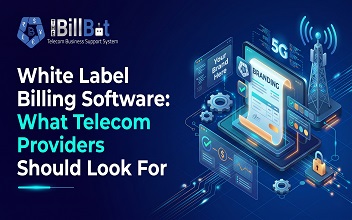
White Label Billing Software: What Telecom Providers Should Look For
Bhargav
Nov 16, 2026
Table of Contents
- Introduction
- What Is White Label Billing Software?
- Why Do Telecom Providers Need White Label Billing Software?
- 1. Maintain a Consistent Brand Identity
- 2. Reduce Manual Billing Activities
- 3. Support Different Telecom Services
- 4. Improve Customer Experience
- 5. Prepare for Business Growth
- 10 Important Features to Look for in White Label Billing Software
- 1. Complete Branding and Customisation Options
- 2. Flexible Billing Models and Pricing Structures
- 3. Automated CDR Processing and Usage Rating
- 4. Integrated Customer and Account Management
- 5. Customer Self-Service Portal
- 6. Payment Management and Automated Collections
- 7. Seamless Third-Party Integrations
- 8. Scalability and Multi-Tenant Capabilities
- 9. Reporting, Analytics and Business Insights
- 10. Security, Reliability and Technical Support
- White Label Billing Software vs Traditional Billing Software
- How to Choose the Right White Label Billing Platform
- Step 1: Identify your business requirements
- Step 2: Evaluate branding flexibility
- Step 3: Review billing capabilities
- Step 4: Test integrations
- Step 5: Understand pricing and total costs
- Step 6: Request a live demonstration
- Step 7: Review support and future flexibility
- How The Bill Bot Supports Telecom Business Management
- Common Mistakes to Avoid When Selecting White Label Billing Software
- Frequently Asked Questions (FAQs)
- 1. What is White Label Billing Software?
- 2. Why do telecom providers need white label billing solutions?
- 3. What features should I look for in White Label Billing Software?
- 4. Can White Label Billing Software support multiple telecom services?
- 5. Is White Label Billing Software suitable for ITSPs and MSPs?
- 6. Can I customise the customer portal with my company branding?
- 7. Does White Label Billing Software support automated payments?
- 8. Is white label billing software better than developing a custom billing system?
- Conclusion
Author : Bhargav
Published : 16 Nov 2026
Related Articles
Explore more insights
14 Nov 2026 / Bhargav
Telecom Billing Migration Checklist: What to Prepare Before Switching Systems

13 Nov 2026 / Bhargav
Multiple Bill Runs: How to Bill Different Customer Groups Separately
12 Nov 2026 / Bhargav